Skip to content

More wisdom lessons: Embracing ‘what is’

I almost didn’t go to yoga class this morning. I was awake at 5 a.m. but my body felt worn out, more so than usual. I wanted to “sleep in” until 6:15, except I couldn’t sleep. So I figured, if I’m not going to sleep, I might as well do yoga. And off I went. Read more

Finding patience on the mat — and off

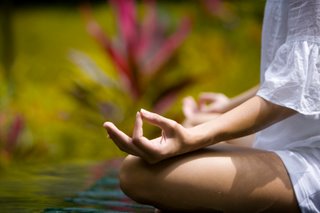
I always get to the 5:45 a.m. yoga class at least 10 minutes early, better to settle in and spend a little time in silence before the studio fills up. Today was no different, at least not at first. I stretched a bit before closing my eyes and taking up half-lotus, patiently waiting for our teacher to arrive. Soon. Shortly. Any minute now….

Every time the door opened I couldn’t resist the urge to open my eyes and see if was the teacher. Nope.  As 5:45  gave way to 5:48, then 5:50, and soon 5:53 (or so, based on my general clock sense), a few of us looked around at each other and shrugged. Surely it’s just as easy for the teacher to hit the snooze and oversleep as it is for any one of us. Lord knows I contemplated rolling over this morning before finally throwing back the covers and setting the day in motion.

Funny thing was, we all just sat there on our mats, quietly facing front in the darkness. One or two whispered questions, another got up to look outside, but, for the most part, we sat. We stretched a bit more and then continued to sit. No anger rising, as it might if we were standing in line at Walmart and the person in front realized she didn’t have her credit card. (Not that I have any experience with that sort of frustration.) No annoyance coming out in body language or sarcastic commentary, as might be the case in a traffic jam or a doctor’s waiting room. Nope, we just sat, perhaps a little confused or resigned, but not impatient or angry.

Finally one student got up and went to ask a Y staff person if he knew what was going on. They phoned the teacher who had, in fact overslept, and she asked if we’d be willing to wait 12 minutes. Most of us said we would. A few left, probably those who had to get to work sooner rather than later. The rest of us stayed, either stretching on our mats or walking the track or treadmills until the teacher showed up. And then we did yoga, just as if nothing were out of the ordinary.

How wish I could say I’d have that same attitude in so many other situations when I find myself growing impatient and frustrated. Why is it I can sit quietly in a darkened Y studio, knowing I may have gotten up at 5 a.m. for no reason at all, and not lose my cool when I lose it so easily at other times? It comes back to the heart of yoga, of course, and why we’re all there in the first place. We’re not just there to build muscle or lose pounds. We’re there to gain peace, to find a balance the normal world cannot give, and even a 20 minute delay in starting isn’t going to distract us from our appointed rounds.

So the question is how to translate that mat-based patience into everyday patience. Why can I sit and feel such compassion and kindness toward my yoga teacher — even at 5:30 a.m. when  I could be warm under my covers — when I can’t muster up even a fraction of that patience for the old lady driving 15 miles per hour down the back road to our house on a busy afternoon or the bank teller who disappears from the drive-in window for what seems like a half hour while I’m waiting to deposit a check?

Maybe it’s the deep breathing. Maybe it’s the God connection — because I am always in a state of heightened spiritual awareness at yoga, and even for the ride to and from the Y. Maybe it’s the unity I feel with the people around me, each one of us trying to do one small thing to make our lives better, to make ourselves better, not in a selfish way but in a real effort to live up to our true potential as human beings.

“Love is patient,” we read in Scripture. Today in our little yoga studio, that verse was palpable, and it reminded me that sometimes — often — love is a choice we make.

Praying in the company of Brother Sun and Sister Moon

Earlier today, I was out in our sun porch doing some gentle yoga in hopes of loosening up a nagging back muscle problem. As I stretched upward to begin a basic sun salutation, I realized I was looking up at my beautiful clay crescent moon, given to me by a good friend many years ago. Then later, as I turned to do a warrior pose, I noticed the clay sun hanging directly opposite. Suddenly all felt right with the world on this Feast of St. Francis of Assisi.

I haven’t taken time for homegrown yoga or silent prayer lately — for too many reasons to list, none of them good enough — so it seemed especially coincidental that I was raising my arms in praise of God’s creation under the watchful eyes of Brother Sun and Sister Moon on the feast of the saint who made them famous in poem and prayer.

Even my sun porch sacred space — a simple wooden tray with a battery-powered candle, incense burner, and a single holy image (rotating depending on my mood or the day) amid dried sunflowers, seeds, and pine cones — seemed in sync with the feast day. And as I sat down on my meditation cushion in silence, the rain tapping on the roof overhead provided the perfect soundtrack and the towering oaks and pines outside a glorious backdrop.

I found myself smiling, aware that my decision to put aside piles of work for a rare session of yoga and meditation when I really didn’t have a minute to spare, must have been a little nudge from the Spirit. Everything in me had been fighting against this yoga prayer practice today, and yet I threw down my mat, lit my incense, shrugged off my back pain, and entered into that beautiful silent space that occurs when mindful physical motion gives way to the stillness of spiritual contemplation.

On top of that, my back is feeling much better, so it was a win-win.

Here’s St. Francis’ Canticle of Brother Sun and Sister Moon for a little inspiration on this fall night. Why not read it outside under the stars, or clouds?

Most High, all-powerful, all-good Lord, All praise is Yours, all glory, all honour and all blessings.

To you alone, Most High, do they belong, and no mortal lips are worthy to pronounce Your Name.

Praised be You my Lord with all Your creatures,
especially Sir Brother Sun,
Who is the day through whom You give us light.
And he is beautiful and radiant with great splendour,
Of You Most High, he bears the likeness.

Praised be You, my Lord, through Sister Moon and the stars,
In the heavens you have made them bright, precious and fair.

Praised be You, my Lord, through Brothers Wind and Air,
And fair and stormy, all weather’s moods,
by which You cherish all that You have made.

Praised be You my Lord through Sister Water,
So useful, humble, precious and pure.

Praised be You my Lord through Brother Fire,
through whom You light the night and he is beautiful and playful and robust and strong.

Praised be You my Lord through our Sister,
Mother Earth
who sustains and governs us,
producing varied fruits with colored flowers and herbs.
Praise be You my Lord through those who grant pardon for love of You and bear sickness and trial.

Blessed are those who endure in peace, By You Most High, they will be crowned.

Praised be You, my Lord through Sister Death,
from whom no-one living can escape. Woe to those who die in mortal sin! Blessed are they whom death will find doing Your most holy will, for the second death shall do them no harm.

Praise and bless my Lord and give Him thanks,
And serve Him with great humility.
— St. Francis of Assisi

The space between fear and trust

This morning I returned to my beloved early morning yoga class after a very long hiatus due to a physical condition/injury. I won’t bore you with details. Suffice to say, I had and will have for the rest of my life a situation that prevents me from fully doing yoga the way I like to do it.

I was supposed to be starting 200-hour yoga teacher training this month. Instead, my favorite yoga teacher is recommending I learn to be satisfied with taking classes in “chair yoga” and “water yoga.” I’m not good at being satisfied with what I view as “less than,” but perhaps therein lies the lesson. Another thing I really don’t want to hear.

For the past few months, I have seesawed between anger and sadness — that I can no longer do yoga the way I have always done it, that I have to accept limitations, that I have to let go of my ego in class and sometimes not do what everyone else can do, even people much older than me.

So, anyway, back to this morning… I looked at my bedside clock and saw 5:14 a.m. and realized that, if I hurried a bit, I could get to the Y in time for 5:45 a.m. class. I went back and forth in my head for at least a few minutes before I finally jumped up and starting hunting around in the dark for my yoga clothes. I got to class, settled in, and, as is always the case when I start to bend and stretch into poses, began to unwind, for the first time in months. After class, my teacher stopped to ask how it went since she knows my physical issues and worked with me when I first discovered them.

As we chatted, the conversation turned from yoga to life in general, and I let slip that I really need yoga at this point in my life because there is so much looming ahead of me that scares me. Yoga helps me quiet down long enough to pray. That’s the bottom line here. I need yoga in order to enter more deeply into prayer and, as a result, enter more fully into my own life.  And this is what my yoga teacher said (more or less):

Imagine that you’re swinging on a trapeze. You can see the other bar you need to grab; it’s right there. But you can’t get to that bar unless you let go of the one you’re holding at the moment. Fear is that space between, that moment when you’re not holding onto anything. You have to trust that if you let go and reach, you’ll get to the other bar. And she’s exactly right. I am holding onto my current trapeze bar for dear life, watching the other bar swinging and swinging and swinging just ever-so-slightly beyond my grasp. I can almost feel it, but every time I stretch in that direction, I get a bit unstable and pull back, looking down to see if the net is still there, if I have a safe escape hatch.

“What’s the worst that can happen?” she asked me. Oooh, that’s a question you don’t want to ask someone like me. She doesn’t have enough time to hear my litany of What ifs…. So I said the first thing that popped into my head: “I’ll make a fool of myself.” And she looked at me in the sweet and peaceful way that she has about her (because she does yoga all the time) and reminded me that fear breeds fear and that I need to let go and let the Universe accept all the fear that’s weighing down my shoulders and mind and heart so I can focus on something positive.

She said “universe,” but I heard God because that is my Universe. And that is what God asks of me: Don’t be afraid. Surrender. Trust.


What’s the worst thing that can happen? I guess the worst thing is that I’ll miss the bar after all and fall to the net below. Am I willing to risk falling? Do I believe in my heart that God will catch me if that happens? Can I let go and fly through the air with nothing holding me up but trust in God, in the Universe? I guess we’ll find out.

Where the ‘Amen’ meets the ‘Om’

This essay originally appeared at the Catholic portal of Patheos.com:

By Mary DeTurris Poust

When I took my first yoga class more than twenty years ago, I was in a bit of a crisis in terms of the Catholic faith of my birth. My mother had recently died and I had moved out of my family home and across the country. I was searching in so many ways and came upon yoga through a friend who knew a teacher who held classes in her home. There, on a mat in an empty living room, I learned how to stretch and settle my body in new ways, ways that allowed me to more easily enter a spiritual realm that has always beckoned to me.

So began my odyssey into an Eastern world that some would have us believe is not only incompatible with Roman Catholic faith but dangerous to it. Of all the posts I put on Facebook, anything having to do with yoga is sure to stir up ominous warnings. I have been told, on more than one occasion, that it is the work of the devil. And yes, I have read what the Vatican has warned about “New Age” religions (FYI: Yoga isn’t even remotely new). Quite frankly, someone who is inclined to make an idol of yoga, turning it into an obstacle rather than a pathway to God, is probably just as likely to turn certain devotions within the church into idols or superstitions—from obsessing over the trappings of the faith, to burying a statue to sell a house, to leaving slips of papers in pews as a guarantee that a prayer will be answered. Idolatry comes in all forms; it doesn’t take yoga to make that happen.

Permit me, then, to take you into my world of yoga, a world where Amen and Om happily coexist. During my early days of yoga, I threw myself into the practice. I even managed a yoga center for a while and began training to become a teacher, something I regretfully never completed.

I read the Bhagavad Gita and Pantanjali’s Yoga Sutras.

I chanted.

And yet, when it came time to meditate on a mantra, I didn’t want anything Sanskrit. I wanted Christian scripture, because that is my core. As I sat in half-lotus position with many other yogis-in-training, I breathed in and out to the words: “Be still, and know that I am God,” or, “I am with you always.” At a time of personal confusion and chaos, yoga gave me a peaceful place to reconnect with God, a way to listen to what He had to say above the din of my life, and an open door that led back to the richness of my own Catholic faith.

Over the years, my practice has waxed and waned, but inside me beats the heart of a Catholic yogi. When I recently returned to yoga class at my local YMCA, I was not on my sticky mat five minutes before I could feel myself smiling, my shoulders relaxing, and my heart singing. Different types of prayer methods work for different people and, for me, one thing is clear: Yoga is my entry into prayer, even in a sweaty, crowded YMCA studio.

Most people in this country don’t do yoga as a spiritual practice. They do it because it helps their backs, or makes them more flexible. But I always hope for the daring YMCA teacher who inserts spiritual elements into a class. I don’t do yoga to lose weight or get stronger, although those are surely side benefits. I do yoga to find that still, silent space at my center, where God can enter in.

Think of your own prayer life for a moment. Does kneeling help you enter more deeply into prayer? Does lying prostrate before an altar convey a sense of total surrender before God? In much the same way, yoga uses physical positions to help us reach spiritual heights, whatever our faith tradition.

As I stood on my mat last Sunday, listening to my teacher walk us through some difficult poses, he reminded us that we need to look at ourselves with compassion when we can’t get something right, and he urged us to let that gentleness emanate outward when we left class. Yoga is about compassion.

My Monday night teacher, who belongs to my parish, starts each class by asking us to bow our heads and think about the “intention” we have for our practice. How beautiful and perfectly complementary to the intercessory prayer we practice as Christians. She always ends the class by saying: “Shanti (peace), shanti, shanti. Peace in our hearts, peace in our homes, peace on our planet.” Yoga is about peace.

Finally, every yoga class ends the same way, with hands held in prayer position over the heart as we bow slightly to each other and say, “Namaste,” which means, “the divinity (or light) in me bows to the divinity in you,” not so dissimilar to the way Benedictine monastics have always bowed to “the Christ in each other” as they process in and out of choir. Having grown up believing that my body is a temple of the Holy Spirit, this practice echoes my own Catholic beliefs. In fact, I should take that posture and attitude toward more people in my life, not just those on the mat next door. Yoga is about recognizing the presence of God, in ourselves and in the world around us.

I think a lot of fear and confusion stem from the unknown. People don’t know what to make of the strange Sanskrit words, the poses with animal names, the chanting. There is a sense that if you do yoga, you must be exploring Hinduism or at the very least looking for something outside Jesus Christ. But nothing could be further from the truth for faithful Christians who use Eastern traditions to strengthen our prayer lives. We are not there to be converted away from our faith but to grow stronger in it through methods that influence our Catholic spiritual lives in powerful ways.

Many traditional Catholic devotions don’t work for me. I’m really not that good at saying the Rosary. I struggle with the Liturgy of the Hours, even though I continue to pray it as often as possible. But the physicality of yoga as a way to enter into meditation? That feels as natural to me as breathing. And as I breathe in and out and bring my body to a point of stillness, I can feel myself inching closer to God, pose by pose.

Manic Monday: Returning to ‘normal’ life

Our Christmas tree came down last night, along with the rest of the decorations. The magi hardly had time to settle down in front of the creche when I shipped them off to the basement. Such is the end of the season, at least around here. By this time of year, I’m ready to return to ordinary time and Ordinary Time.

So here’s what’s on tap on this Manic Monday…

The above YouTube clip is a follow-up to last week’s ‘Twinkle’ post. Someone captured the kids playing at Mary Jane’s funeral. (Thanks, Pam, for sending that to me.) When the clip is rolling, Olivia happens to be visible on and off over on the left in the cream-colored top.

Bookshelf: I’m reading about a dozen different books all at once as research for the two books I’m writing, but there’s one that stands out right now, a recommendation from a Facebook friend. It’s called Listening Below the Noise: A Meditation on the Practice of Silence by Anne D. LeClaire. Loving it so far. Here’s one piece that resonated with me because I have experienced it so powerfully myself:

“Over the years I had prepared meals in quiet rooms, in accidental silence, as I would later come to call it, but I was discovering that intentional silence brought a focus to everything. Ordinary acts — measuring oats and water, chopping walnuts, scooping out a handful of raisins, stirring oatmeal — were transformed into meditations simply by the attention stillness brought to the tasks. Later, scrubbing out the gummy saucepan, I found unexpected pleasure in this simple job. I was experiencing what Buddhists have always taught: Silence, along with the attention it fosters, is our anchor to the present, to the here and now.”

Perfect. Today when I make my silent oatmeal, as I do each weekday, I will do so with those words ringing (silently, of course) in my head, reminding me that this practice of still, slow eating truly does allow me to bring a depth and calmness to my day that is absent when I skip this favorite ritual. My meditative breakfast has become, without question, one of my best prayer moments of any day.

Soundtrack: Dreamland by Madeleine Peyroux, something Dennis discovered on The Coffee House on Sirius. A bunch of it’s in French. Very cool. Check it out.

Viewfinder: Below is a shot of my Christmas gifts, or most of them, collected on the dining room table. Makes you wonder if perhaps I’m planning to open a monastery or a retreat center. We’ve got prayer flags up front; the official Abbey Psalter from the Abbey of the Genesee; Yoga Prayer DVD by Father Thomas Ryan, CSP; Landscapes of Prayer: Finding God in Your World and Your Life by Margaret Silf; a cross candle holder; a Himalayan singing bowl; incense, lots of it; a tea set with Zen tea. I did get some other goodies that had nothing to do with prayer or spirituality, like the Midnight in Paris DVD and a flameless candle, although that last one borders on spiritual, too, doesn’t it?

My Christmas bounty.

The lovely Abbey Psalter.

Visiting my grandmother, who turned 99 on New Year’s Day.

Birthday boy.

Skip resolutions. Go for ‘goals’ instead.

What new routines have you vowed to start and keep this year? A healthy eating plan? Exercise regimen? House re-organization effort? The new year offers the promise of a clean slate, a chance to begin again or try for the first time something that will improve our health, our home, our world.

I tend not to make typical resolutions, but I know plenty of people do. Every year, when the first week of January hits, our YMCA becomes a bit of a zoo. You can’t find a free treadmill or weight machine no matter what odd hour of the day you show up. I asked a trainer once, “How long will this go on?” He said, “Hang in there until the end of February and they’ll all be gone.”

We spend a lifetime – or at least a lot of years – acquiring the bad habits or out-of-shape bodies or lukewarm prayer lives that compel us to make resolutions, and yet we expect dramatic results in two months or less. We forget that undoing our habits is a one-day-at-time effort. One day at a time, one year at a time, one decade at a time.

Unfortunately, our society has brainwashed us into thinking we can find a quick-fix for everything. Pop a pill, drink a potion, buy a gadget, and you, too, will look like the plastic perfection staring out from a magazine cover. Of course, body and beauty resolutions are an easy target. They bear the brunt of the new year promises (both fulfilled and broken) because physical appearance is so important in our culture, but I know from experience that spiritual exercise routines and daily doses of prayer are no easier to stick to than that weekly abs class or low-fat diet. Spiritual renewal requires hard work.

At the start of each year, I tend to make a mental list of things I’d like to accomplish by the next year. Not anything like “lose five pounds” because that seems to be a perpetual resolution in my middle-aged life, but things that are broader, more about changing my overall perspective or approach to life than fine-tuning one small aspect.

When I looked back at last year’s list, I was happy to realize I’d accomplished most of what I set out to do without even realizing it. Go on silent retreat. Check. Get a spiritual director. Check. Learn more about Centering Prayer. Check. The one piece that still needs some work is my plan to declutter my office space, although even that isn’t a total washout. So I’m starting this new year with that one thing on my list of goals again plus a few new things: develop my own yoga practice for when I’m home and unable to get to a Y class; look into yoga teacher training programs; attempt regular or semi-regular silent meditation; smile more and stress less; spend more individual time with each of my children; and go on regular dates with my husband. No set time periods, amounts, limits or expectations. Just general hopes for this or some other year down the road.

I like the annual goals approach because it removes the one thing that tends to derail typical resolutions: the notion that if we screw up within a day or a week or a month we might as well give up completely. When we have an annual goal, we can continue to get back up every time we slip and know that there’s still time to make things right. And, if we don’t get to everything on our list by the end of the year, well, there’s always next year. But, it’s not likely that even our annual goals will prove successful if we approach them at breakneck speed, spinning in a hundred directions at once.

In one of my favorite books, A Gift from the Sea, Anne Morrow Lindbergh wrote: “With our pitchers, we attempt sometimes to water a field, not a garden. We throw ourselves indiscriminately into committees and causes. Not knowing how to feed the spirit, we try to muffle its demands in distractions. Instead of stilling the center, the axis of the wheel…”

What are the distractions that muffle your spirit? What can you do to still your center in order to achieve your resolutions and goals, whatever they may be?

Even just five minutes of silent stillness every day can begin to reshape our thinking and our lives, and give us strength to follow through on our plans. Five minutes. Can we do that? No formal resolutions, just an unspoken agreement that we will give ourselves five minutes every day to sit and wait for God. Not five minutes while we check email or five minutes while we stir soup or five minutes during TV commercial breaks. Five solid minutes of distraction-free silence away from everything and everyone else.
One small, shared goal to ring in the new year.

Picking up scattered fragments of peace

When I returned from my wonderful weekend retreat almost three weeks ago, the sense of peace surrounding my heart and penetrating my soul was almost palpable…

unflappable…

Kids did dopey things. I didn’t yell. Work deadlines went from bad to worse. I didn’t melt. The car bumper was bashed in by a hit-and-run meanie. I didn’t explode.

It was clear evidence, at least in my mind, of the power of deep and intense prayer practiced over days, rather than short bursts of desperate cries shouted heavenward while sitting at stoplights or wiping the counter.

In the initial days after my retreat, I kept up some semblance of deep prayer and deep peace. I cleared the decks and sat down in silent meditation in my sacred space. I did yoga followed by more prayer. I got up early and prayed the Liturgy of the Hours in the twinkling glow of the Christmas tree set against a backdrop of winter darkness. I was on a holy roll.

But then bit by bit, day by day, the peace started to fragment…

I could almost see it happening.

Sharp shards of silence breaking off and flying away from me in every direction.

I knew enough to realize it was an unhappy development but felt powerless to stop it. The tension of the season, coupled with the crush of work, compounded by the frenzy of family life made me — as it often does — feel as if I should just wave my spiritual white flag and give up my quest for inner peace. Add my voice to the din.

Then I remembered something our teacher said on retreat, something that really jumped out at me as I sat cross-legged on the floor of the yoga studio at Kripalu. So often, when we think of Jesus in prayer, we think of him in the desert, in the garden, in silent solitude. But the truth is, Father Tom reminded us, that Jesus was more often than not surrounded by chaos — people clamoring to get near him, touch his robe, lower a friend through a roof, climb a tree.

Follow, follow, follow. Ask, ask, ask.

And yet we see the way his peace and prayerfulness emerge amid the chaos. The quiet compassion given to the woman caught in adultery, the feeding of the 5,000, the healing of a soldier’s servant, the forgiveness of a thief from the cross. Jesus did not become unloving, harsh and impatient because the conditions around him went from good to bad to abominable. He stayed true to his center, his Truth, bringing his peace into the noise and glare of an often unkind world.

Rather than letting it happen the other way around…

So as we wait just two more days to celebrate the birth of the Prince of Peace, as I look at the absolute insanity that is sure to ensue in the coming hours, I’m picking up the scattered fragments of peace and fashioning them into something usable, something new. I imagine my peace looks a bit like a kaleidoscope now.

Pieces of peace…artfully arranged into something that will cast a brilliant and warm light on everything its shooting and darting rays touch as I turn it gently in my hands.

Chaos into calm. Panic into peace. Fragments into fullness.

All through him, who was…and is…and is to come.

Mellow Monday: Reverberations from my weekend yoga prayer retreat

Technically it’s Manic Monday in these parts, but after a weekend yoga-prayer retreat at the Kripalu Center in Lenox, Mass., I’m really quite mellow. Certainly not manic, despite the truly frightening number of deadlines mounting on the dry erase board in my office.

As was the case with my silent retreat in September, I’m not really ready to wax poetic about what happened at Kripalu so soon after. Too much to absorb, so many gifts, so much to process before I can put it in writing in this space. But I wanted to share some little snippets of my wonderful weekend, which centered on a workshop called “Pray All Ways,” offered by Paulist Father Tom Ryan, who is also a certified yoga instructor and whose sense of peace and prayerfulness is so palpable he practically glows or floats. You cannot help but sit in his presence and think, “I want that.” In the best Christian, yogic, loving, non-jealous way, of course.

The photo above is a view of Kripalu from the road below. The former Jesuit seminary sits on land that is just beautiful, even during this in-between time when trees are bare but the ground is not yet blanketed in white. Still breathtaking.

When I first arrived on Friday afternoon, I was in my more manic mode. I rushed inside, worried that my car might not be parked in the right place, nervous about how the weekend would unfold, sure that something would go wrong. (Glass half-empty person, remember.) So I got inside and was asked to fill out of a form with my license plate number, which is new and not committed to memory. Immediately I felt frustration — at not having thought of this need, at not knowing my number by heart, at needing the number at all. So back out to the parking lot I trudged with pen and paper.

And as I stepped outside, another retreatant was standing there staring, and she pointed me to the top of a tree. There, in what was a rather small tree comparatively, was an enormous hawk. I mean enormous. I’m including his photo below even though it’s a little blurry (I didn’t have my good camera with me) because I just needed to give you a glimpse. He sat there for the longest time, unfazed by the people coming and going with their roller-suitcases and cars and chatter. Here he is:

You’ll notice that branch is bending under his weight. He was just majestic. At another point during the weekend, the same hawk was flying overhead, his wingspan inspiring others to stare up at the sky in awe. I never would have known about this resident hawk (the greeter, as he was referred to by the smiling people at the front desk) if I hadn’t forgotten my license plate number. So there you go. I was rushed headlong into the fact that this weekend would be about awareness, about gratitude, about slowing down, about the practice of the presence of God.

The hawk wasn’t the only over-sized animal to cross my path. This giant rabbit, like something out of Alice in Wonderland, let me get within two feet of him to take a picture. On top of that he was surrounded by people enjoying the late autumn sunshine at picnic tables all around him. Even the animals are mellow here.

After a solid day of praying and sitting and absorbing so much wonderful food for thought (and wonderful food in general), my retreat partner, Michelle, and I decided to skip Yoga Dance, which was a little much even for this adventurous soul, and go for a little hike to the lake. So worth it.

First we stopped at the small labyrinth. The entrance is in the photo below. I will admit that perhaps this wasn’t the best labyrinth, as I got “lost,” which I didn’t think was supposed to be possible in this walking meditation. I’m guessing it’s much more effective when all the plants are high and in bloom and provide a clear marker of the path. It was still fun.


Here’s a photo of the lake and one of me with Michelle:

And finally, here’s the statue at the front entrance. Lots of Hindu and Buddhist statues here and there, as you would expect at a yoga center, but our weekend was so focused on Christian prayer and Jesus Christ that it was easy to forget at times that this is no longer a Catholic facility. As we prayed lectio divina, did the Examen, spent long periods on intercessory prayer, and even had Mass while sitting on the floor of the yoga studio Saturday night, I felt so grateful for the experience and so alive with prayerful possibility.

I will be back later this week with some further reflections. Till then, I’ll just share one pearl of wisdom that Father Tom shared with us: Contemplation isn’t always about retreating from the world in silence and solitude; it’s about “taking a long, loving look at the real.”

Look around you today. Right now. Look deeply into the eyes of the next person you meet. Listen attentively to the person on the phone or at the door or in the next office. Drink in the wonder of creation as you drive or walk or run to your next appointment. You just might be amazed to find God right under your nose. Namaste.